Where Solawave is made starts in Venice, California, home of the brand built around red light. I go through how its wand, masks and serums work together.
Where Is Solawave Made: The Venice, California Red Light Brand
Red light, from a Copenhagen lab to your bathroom shelf
In 1903 Niels Ryberg Finsen stood up in Copenhagen and won the Nobel Prize in Physiology or Medicine for treating diseases, especially lupus vulgaris, with concentrated light radiation. The citation says he had opened a new avenue for medical science. He was born in Tórshavn in the Faroe Islands, built his own light institute in Copenhagen in 1893, and was too ill to attend the ceremony. Light as medicine began with a sick man and a very stubborn idea.
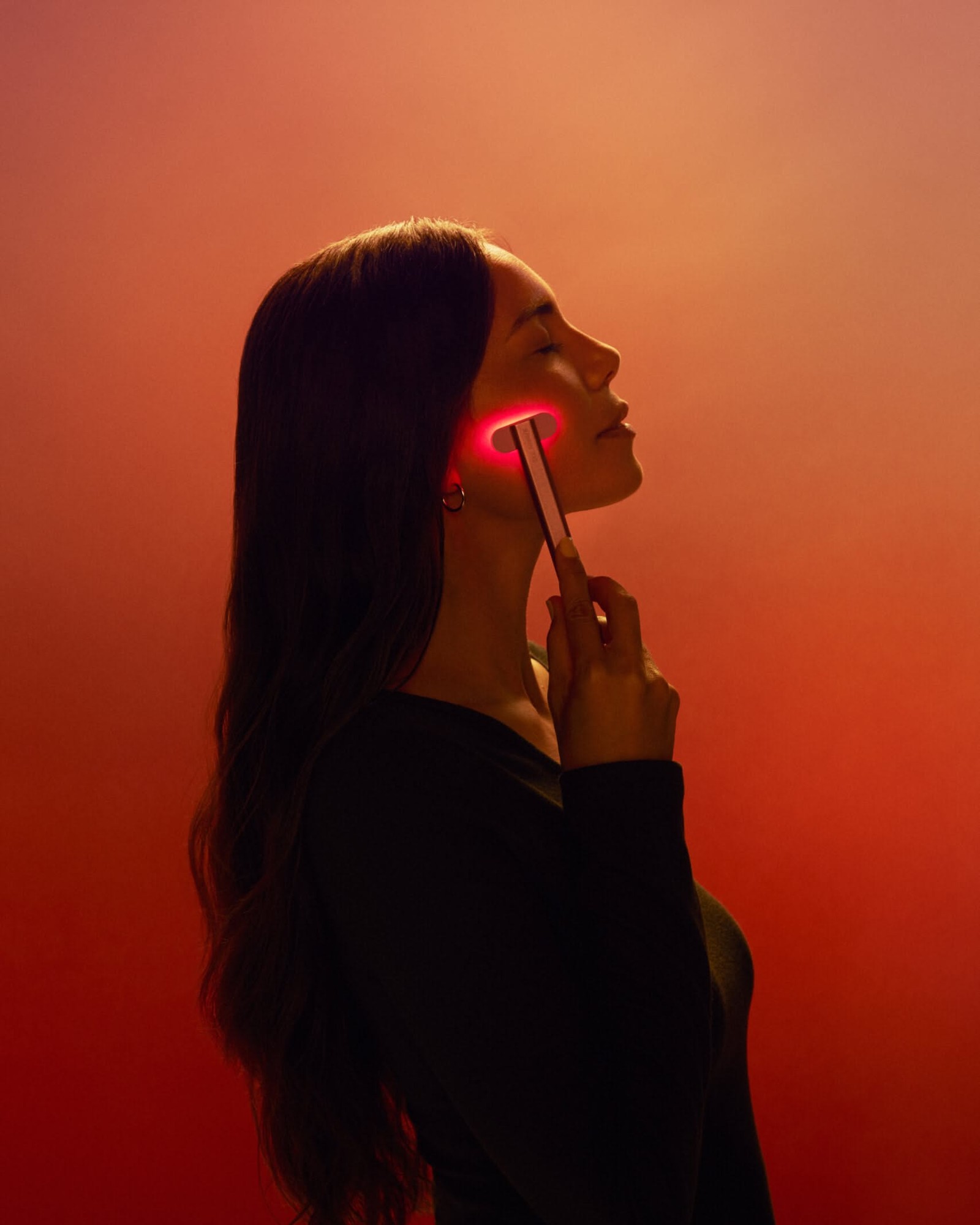
A century on, the idea has shrunk to something you can hold in one hand. Solawave is the brand that made that hand-held version feel normal. It is based in Venice, California, and was founded by Andrew Silberstein and Eli Bailey, who say they came to red light after years of struggling with their own skin. The brand's line is that it started in front of the mirror, not in a boardroom, and I believe it, because the whole range is organised like a bathroom routine: a light tool, then a light-boosting topical, then a mask for a specific zone.
The Solawave wand is the centre of it, and the brand describes it as four jobs in one: red light, galvanic current, gentle warmth and massage. It is sold as FDA-cleared, which the brand states itself. The trick is to treat the first grid as a menu rather than a shopping list. The Radiant Renewal wand is the full version, and the 2-in-1 Skincare Mini is the small one for a travel bag. Bye Acne is the blue and red light tool for breakouts, a three-minute treatment by its name. Eye Recovery Pro is a mask for the eye area, Neck and Chest Pro covers the place we all forget, and Wrinkle Retreat Pro is the full face mask. The LightBoost Wand Activating Serum is the one that goes under the wand for glide, and the LightBoost Face & Neck Serum is a daily layer that stands on its own.
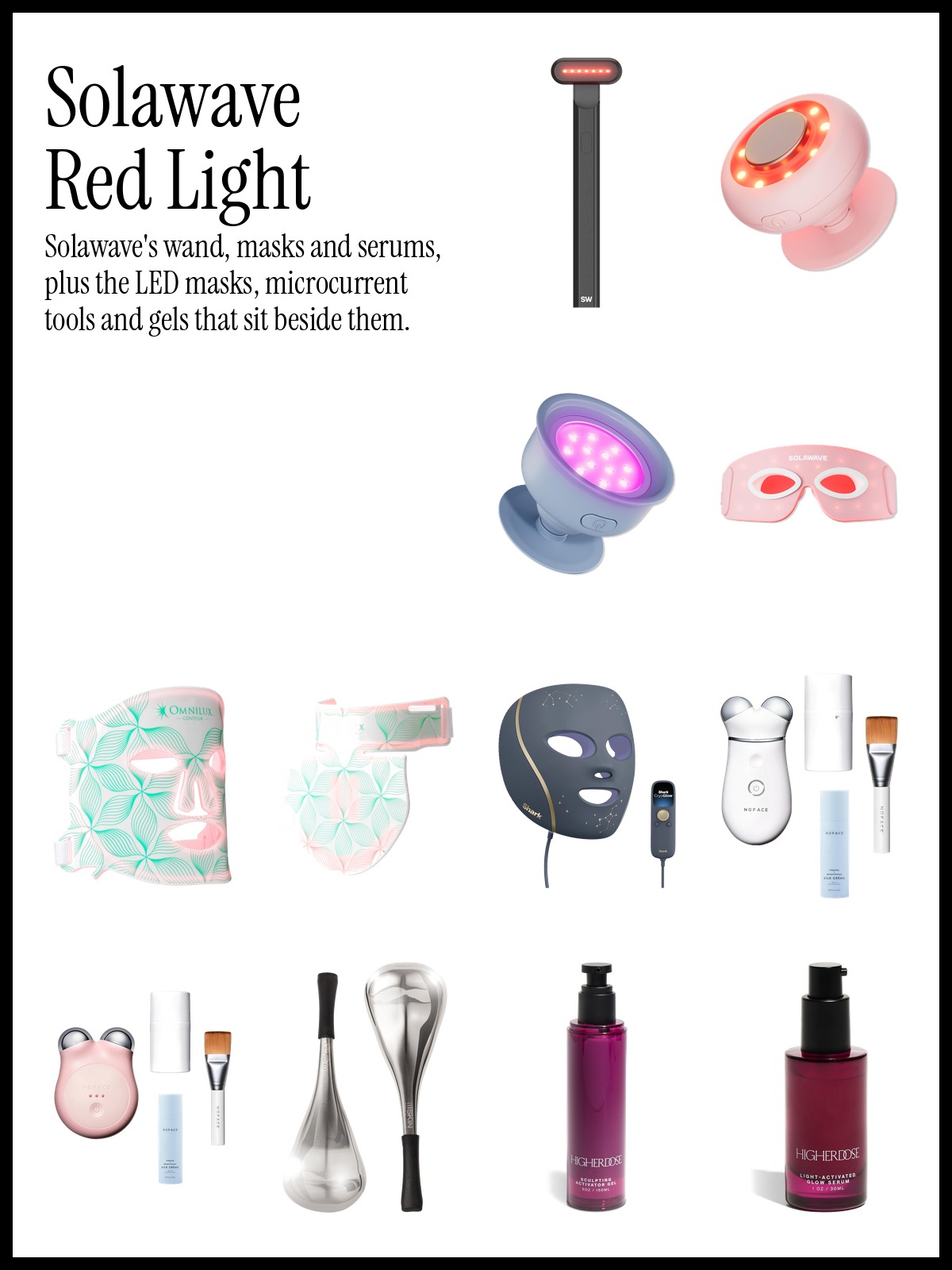
The SolaWave line from wand to mask and serum

Radiant Renewal Red Light Skincare Wand
Solawave
$169

Radiant Renewal 2-in-1 Skincare Mini
SolaWave
$89

Bye Acne: 3-Minute Blue + Red Light Therapy Acne Treatment
SolaWave
$89

Eye Recovery Pro Red Light Therapy Mask
SolaWave
$189

Neck and Chest Pro Light Therapy Mask
SolaWave
$349

Wrinkle Retreat Pro Light Therapy Face Mask
SolaWave
$399

LightBoost Wand Activating Serum
SolaWave
$38

LightBoost Face & Neck Serum
SolaWave
$56
At-home red light and LED devices and masks
Read the manual before you plug anything in. I know, nobody does, but the American Academy of Dermatology says most at-home red light devices are considered safe, asks you to choose one that is FDA cleared, to follow the directions and to wear eye protection if told to. It also says dermatologist-grade light is stronger than what you get at home, so patience is part of the routine.
A mask is the lazy person's version of a wand, and I mean that kindly. You put it on, sit on the sofa, and there is nothing to glide. Omnilux makes the Contour Face mask, red and near infrared by its own name, and a matching Neck & Décolleté one, the pair for covering the whole front of you with one brand. Shark's CryoGlow is smaller, an under-eye piece that combines cooling with LED, good for the puffy morning after a late night. Dr. Dennis Gross's DRx SpectraLite FaceWare Pro and the Therabody TheraFace Mask are the ones for people who like their skincare to look like a piece of design.
HigherDOSE's Red Light Face Mask and Monastery Made's Deep Red LED Mask are the two that feel closest to a spa room. Skin Gym's Pro LED Light Therapy Mask is the less serious one.
A pairing I like: a mask in the evening while you answer email, then the wand from the first grid for one small zone on a day you need it. One big light session and one small one is easier to keep up than two big ones.
What I would skip: any device if you take medication that makes your skin sensitive to light, until you have asked a doctor.

Contour Face Antiaging Red and Near Infrared LED Mask
Omnilux
$395

Contour Neck & Décolleté Antiaging Red and Near Infrared Light LED
Omnilux
$395

CryoGlow Under-Eye Cooling + LED Anti-Aging Red Light & Skin Clearing
Shark
$299

DRx SpectraLite FaceWare Pro
Dr. Dennis Gross
$455

TheraFace Mask
Therabody
$649.99

Red Light Face Mask
HigherDOSE
$349

The Deep Red LED Mask
Monastery Made
$700

Pro LED Light Therapy Mask
Skin Gym
$300
Microcurrent devices and facial sculpting tools
Wet a finger and run it along your jaw. If the gel is gone in seconds, the device is not going to glide, and the whole session turns into friction. Microcurrent tools live or die by what sits between them and your skin.
NuFACE is the name most people know here. The TRINITY+ Starter Kit is the full system, and the Mini+ is the small version for anyone who would rather do five minutes than fifteen. They are built for lifting and tightening, in the brand's words, and they are the ones I would use in a steady routine rather than as a one-off. Foreo's Bear 2 Eyes & Lips is tiny and aimed at the two places where lines show first. Solaris Laboratories' Level Up combines microcurrent and LED in one massager, which saves you a drawer.
Then the cold and the hand-powered. 111Skin's Cryo Sculpting Globes go in the fridge and come out for a puffy morning. Therabody's Theraface Depuffing Wand is a smoother, more modern take on the same idea. Joanna Czech's Facial Massager and Skin Gym's SculptLift 3D Facial Roller are for the days you want to push product in by hand and feel something happen to your face.
These are not red light tools, and I keep them in a separate mental drawer from the wand above. Light is something you sit with. Microcurrent and massage are something you do.
What I would skip: microcurrent if you are pregnant or have a pacemaker or implant, until you have read the manual and asked your doctor.

TRINITY+ Starter Kit Lift & Tighten Facial Microcurrent Device
NuFACE
$395

Mini+ Starter Kit
NuFACE
$250

Cryo Sculpting Globes
111Skin
$115

Bear 2 Eyes & Lips Microcurrent Line Smoothing Device
Foreo
$199

Level Up Microcurrent + LED Massager
Solaris Laboratories
$240

Theraface Depuffing Wand
Therabody
$169.99

Facial Massager
Joanna Czech
$189

SculptLift 3D Facial Roller
Skin Gym
$80
Gels and serums to use under devices
Turn the device off, put it down, and check the bottle. Most of the problems people have with skincare tools come from skipping the gel, not from the tool. A dry device drags.
NuFACE makes two conductive products to go with its own devices, the Hydrating Microcurrent Aqua Gel Activator and the FIX Line Smoothing Serum Microcurrent Activator. I would buy the one from the same brand as the device for the same reason you buy the right charger. Ziip's Crystal Gel is the same idea for that brand's tool. HigherDOSE offers a Sculpting Activator Gel for glide and a Light-Activated Glow Serum for use with light, which is a nice pairing with the masks in the second grid.
The Ordinary is the quiet hero of this page. Hyaluronic Acid 2% + B5 is a hydrating serum, Multi-Peptide + Hyaluronic Acid is for firmness and elasticity as the name says, and Matrixyl 10% + Hyaluronic Acid is aimed at fine lines. They are not designed as device gels, so read the label and the device manual before layering anything under current or light. A serum under a mask is usually fine. A serum under a microcurrent tool needs to be a real conductive gel.
What I would skip: rubbing in a heavy cream or oil before a device session. Oil blocks the glide and leaves the tool slipping around.

Hydrating Microcurrent Aqua Gel Activator
NuFACE
$55

FIX Line Smoothing Serum Microcurrent Activator
NuFACE
$49

Crystal Gel
Ziip
$80

Sculpting Activator Gel
HigherDOSE
$49

Light-Activated Glow Serum
HigherDOSE
$69

Hyaluronic Acid 2% + B5 Hydrating Serum with Ceramides
The Ordinary
$9.9

Multi-Peptide + Hyaluronic Acid Serum for Firmness and Elasticity
The Ordinary
$19.9

Matrixyl 10% + Hyaluronic Acid for Fine Lines and Wrinkles
The Ordinary
$10.9
A wand worth the ritual
Here is my plan for most people: the best way into this world is one tool, used a few times a week, for a month. Start with the wand, add the serum made to go under it, and leave the masks for later. Short, regular sessions beat one long one, and that is honestly the most realistic advice on this page.
Be realistic about the results too. The AAD points out that being FDA cleared speaks to safety, not guaranteed results, and any claim about lines or breakouts is the brand's own. I like Solawave for the ritual, the small pause it puts in the evening. Finsen got a Nobel Prize. You get a quiet bathroom and a soft red glow. If you want to keep browsing, I also put together The Neck Cream Edit, From a Stretch-Mark Accident to Red Light Devices and Derm-Approved Skincare.