Paddywax is a candle company that started in an Atlanta kitchen in 1996 and still treats the jar as half the point. I like the way a candle here turns into a little object for the room long after the wax is gone.
Paddywax Candles: What I'd Actually Buy
A candle story that starts with the vessel
I will admit I choose candles by the jar first and the scent second, which is probably why Paddywax makes sense to me. Gretchen Hollingsworth and David Duncan started making candles together in an Atlanta kitchen in 1996, and Hollingsworth's path ran from a candle-making hobby to small batches sold at craft fairs. Joe Moore joined as a business partner in 2009, and today the company sits within Nashville-based Designworks Collective.
The part I love is how a collection begins. Every one starts with a story, a theme, a place or an idea, and then becomes a vessel, a color, a material, packaging and a matching scent. Soy wax blend and cotton wicks finish the candle, and the vessel is designed to have a second life when the wax is gone (their Our Story page explains the whole process).
The object is never an afterthought. A jar sets the mood while it burns and then turns into a small useful piece of the room, and the whole ritual feels playful.
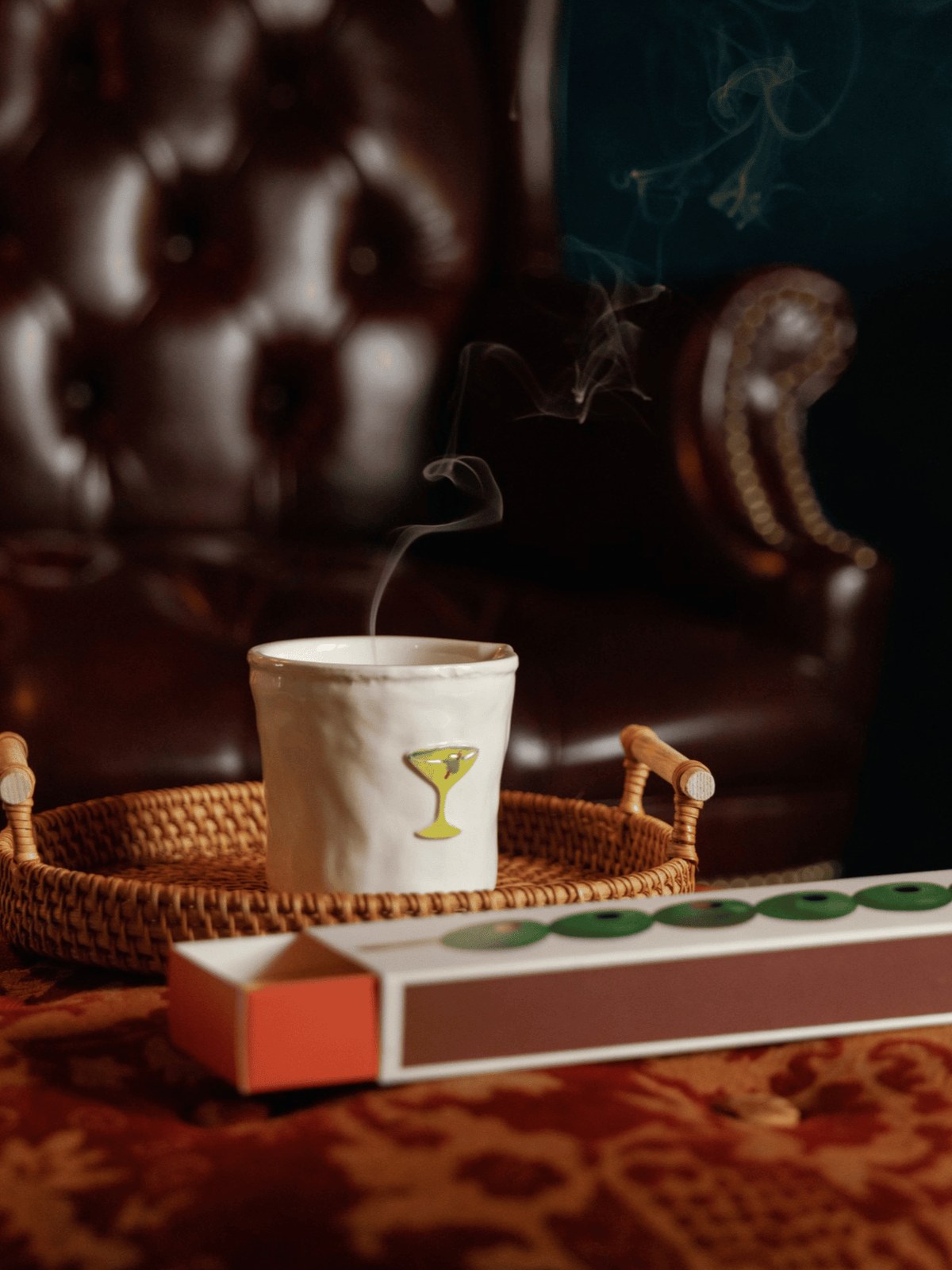
Small rituals, with a wink
I like how far Paddywax pushes a vessel to carry the idea. The Bistro Candle brings a little café energy to a tabletop, and the Lucky Dice Ceramic Candle gives a shelf a playful focal point. The Stack Glass Candle is the easy pick for a brighter corner, and the Stack Glass Diffuser follows the same look without a flame. The Cabana Lavender Striped Hand Painted Ceramic Candlein Grecian Sand is the one I would put out for guests.
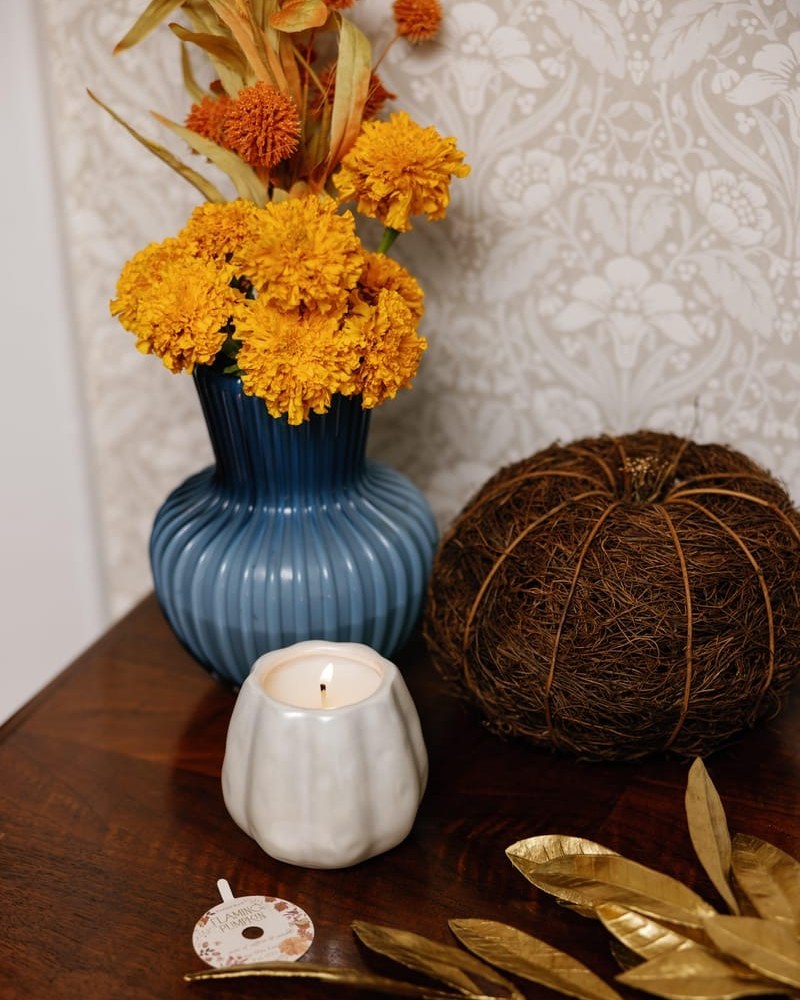
Then it branches out. The A Dopo Diffuser suits an entry or a work nook where I would rather not keep a flame going, and the La Playa Candle brings a glassy, beach-minded note to a coffee table. Picture a late afternoon with the Flaming Pumpkin Candle lit on a bookcase and the lights low. Before choosing a shape, think about where the vessel will live once the wax is gone.
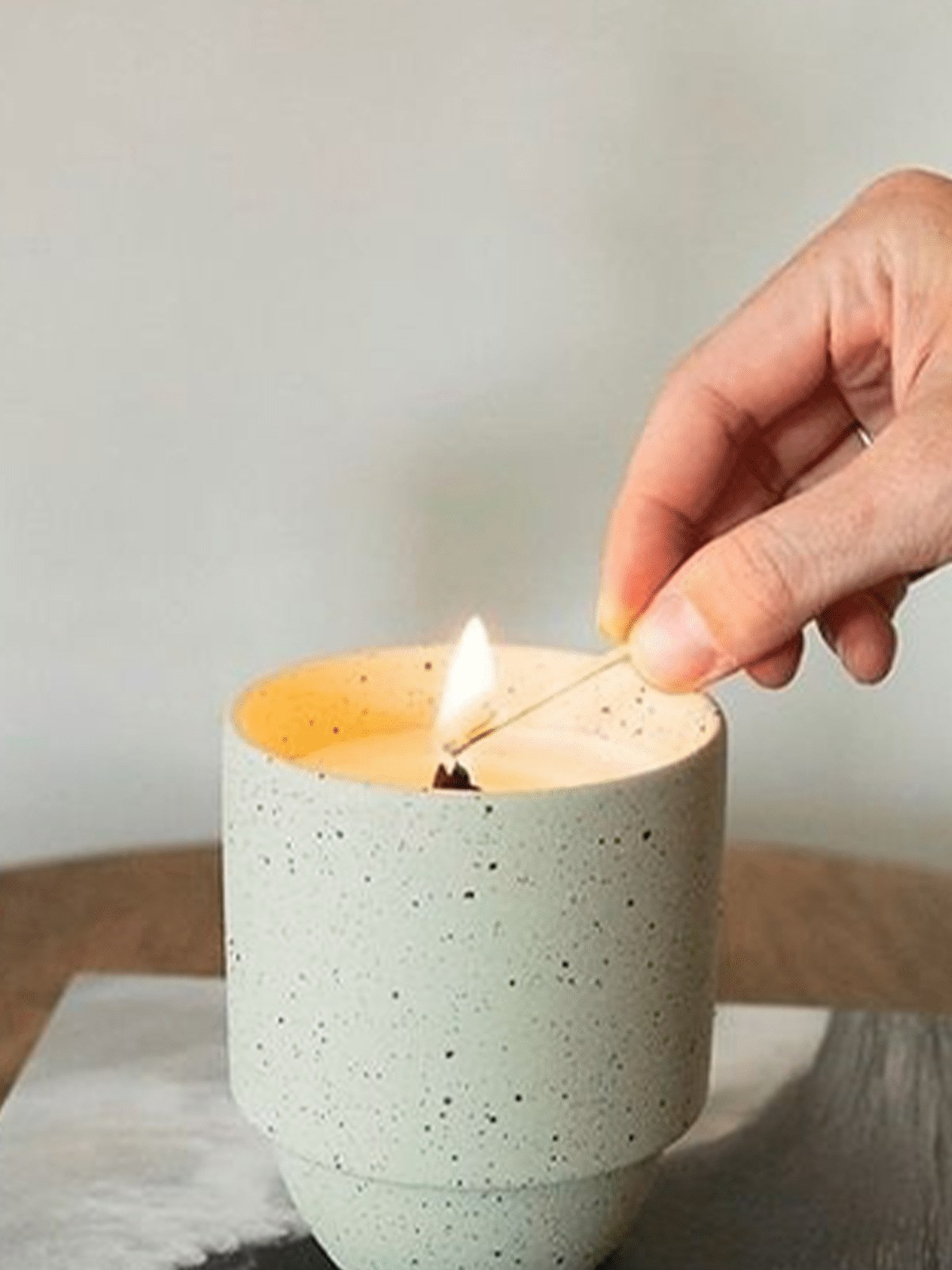


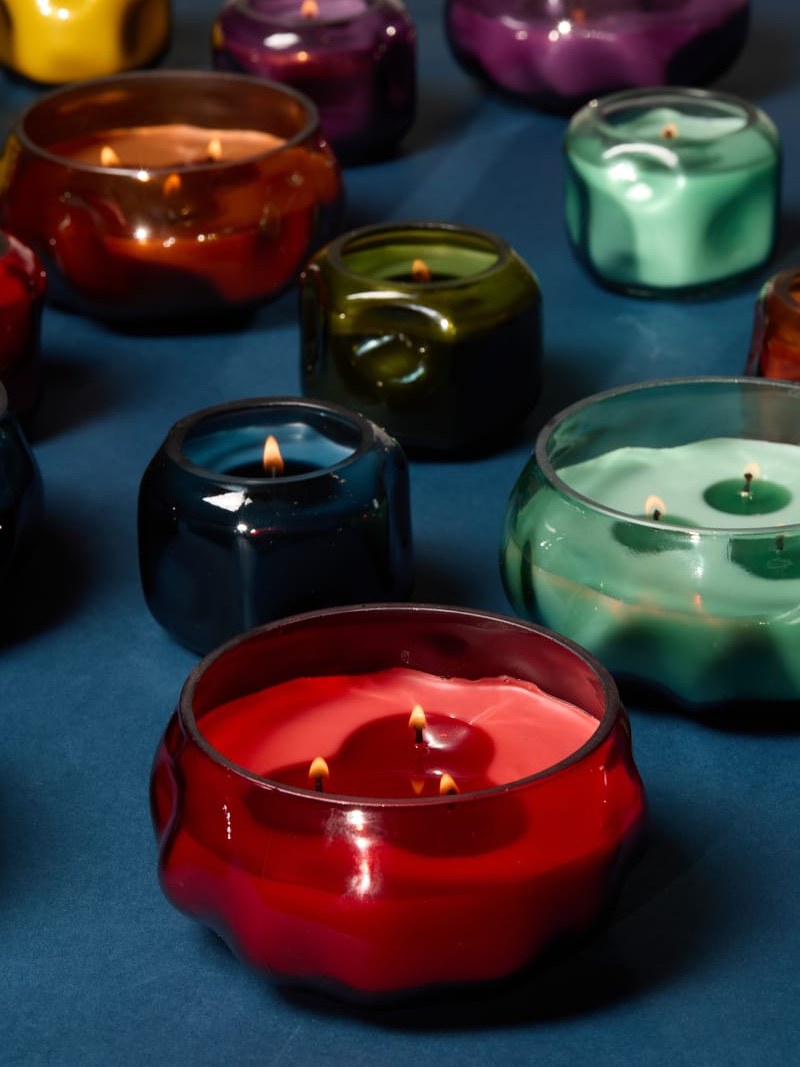


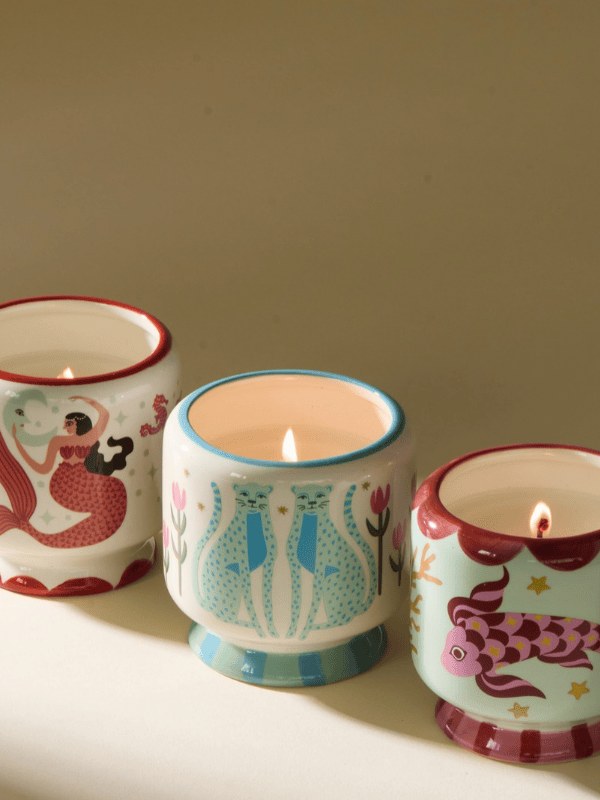
A little atmosphere for every corner
This next group brings different kinds of atmosphere instead of stretching one candle story. Fresh Air & Sea Salt comes in both the Melt and the Basalt vessels, the same scent in two looks, so I would pick one for its look and not place them side by side. The Ripple candles in Desert Peach and Peppered Indigo bring color into a room before the wick is lit. Tobacco Vanilla in Lustre and Linen & Orris in Apothecary Noir are for a darker corner.
I like mixing by room: a Ripple candle on the coffee table, a Basalt one near a reading chair, and the small Redwood tin for a desk or an overnight bag. The Parks Redwoods candle and the Vincent Midnight Cedre Impressionist candle make a mantel feel less tied to one season than the pumpkin pieces do. Begin with one fragrance family in a room, then use the vessel color to tie it to books, flowers or a tray.
What I would skip: clustering several strong fragrances in one small room. One candle can do the work, and the others can wait their turn.

Fresh Air & Sea Salt - Melt 8.5 oz Candle
Paddywax
$32

Wild Fig & Cedar - Melt 8.5 oz Candle
Paddywax
$32

Tobacco Vanilla - Lustre Candle 10 oz
Paddywax
$16

Bordeaux Fig + Vetiver - Eco 8 oz Candle
Paddywax
$26

Lavender + Thyme - Relish 9.5 oz Candle
Paddywax
$26

Vincent Midnight Cedre - Impressionist 6 oz Candle
Paddywax
$32

Desert Peach - Ripple 12 oz Candle
Paddywax
$38

Peppered Indigo - Ripple 12 oz Candle
Paddywax
$38

Misted Lime "Joy" - Mood Collection 8 oz
Paddywax
$20

Pepper + Plum "Nostalgia" - Mood Collection 8 oz
Paddywax
$20

Black Fig + Olive - Vista 12 oz Candle
Paddywax
$38

Redwood & Amber - Grain 12 oz Candle
Paddywax
$38

Pumpkin + Spice - Apothecary 8 oz Candle
Paddywax
$30

Checkmate 11 oz Candle - Cactus Flower
Paddywax
$38

Chili Pepper & Mango - Charmed 8oz Candle
Paddywax
$38

Tabac & Pine - Charmed 8oz Candle
Paddywax
$38

Pumpkin + Spice - Relish 9.5 oz Candle
Paddywax
$26

Sapphire Waters - Lustre Candle 10 oz
Paddywax
$30

Linen & Orris - Apothecary Noir 8 oz Candle
Paddywax
$20

Tobacco & Patchouli - Grain 12 oz Candle
Paddywax
$38

Fresh Air & Sea Salt - Basalt 10 oz Candle
Paddywax
$31

Tobacco Patchouli - Basalt 10 oz Candle
Paddywax
$31

Sienna Sunset - Basalt 10 oz Candle
Paddywax
$31

Cactus Flower - St. Jude Giveback "Possibilities" 11 oz. Candle
Paddywax
$20

Rosewater Santal - St. Jude Giveback "Courage" 11 oz. Candle
Paddywax
$20

Tobacco + Patchouli - Vista 12 oz Candle
Paddywax
$38

Thyme + Olive Leaf - Eco 8 oz Candle
Paddywax
$26

Wild Neroli - Botanica 8 oz Candle
Paddywax
$34

Cotton + Teak - Botanica 8 oz Candle
Paddywax
$34

Redwoods - Parks 11 oz Candle
Paddywax
$42

Charlotte Bronte - Library Candle 6 oz
Paddywax
$32

Redwood - Parks 6 oz Tin Candle
Paddywax
$19

Wild Fig & Vetiver - Form 6 oz Candle
Paddywax
$26

Cabana Christmas Tree Candle
Paddywax
$38

Silver Cypress & Fir Stocking Stuffer 3 Oz Candle
Paddywax
$15

Twisted Taper Candle
Paddywax
$17
A little atmosphere that stays
The lasting appeal of Paddywax is how it makes small moments feel considered without asking a room to change. A candle can be a fragrance, a bit of color, a found object after the last burn, or a reason to gather friends around a pouring bar. Hollingsworth's early instinct to make something by hand still shows in vessels with curiosity and humor. I would start with a scent, then choose the container with its future shelf in mind. Although I know a pumpkin candle will still win in October.