Dermalogica began in 1986 with skin therapist Jane Wurwand, and the range still feels like it came from someone who has actually stood at a treatment bed. Here are the cleansers and powder exfoliators, the serums and moisturizers, and the sunscreens, masks and eye care.

Dermalogica: A Skin Therapist's Shelf, Built From the Treatment Room Out
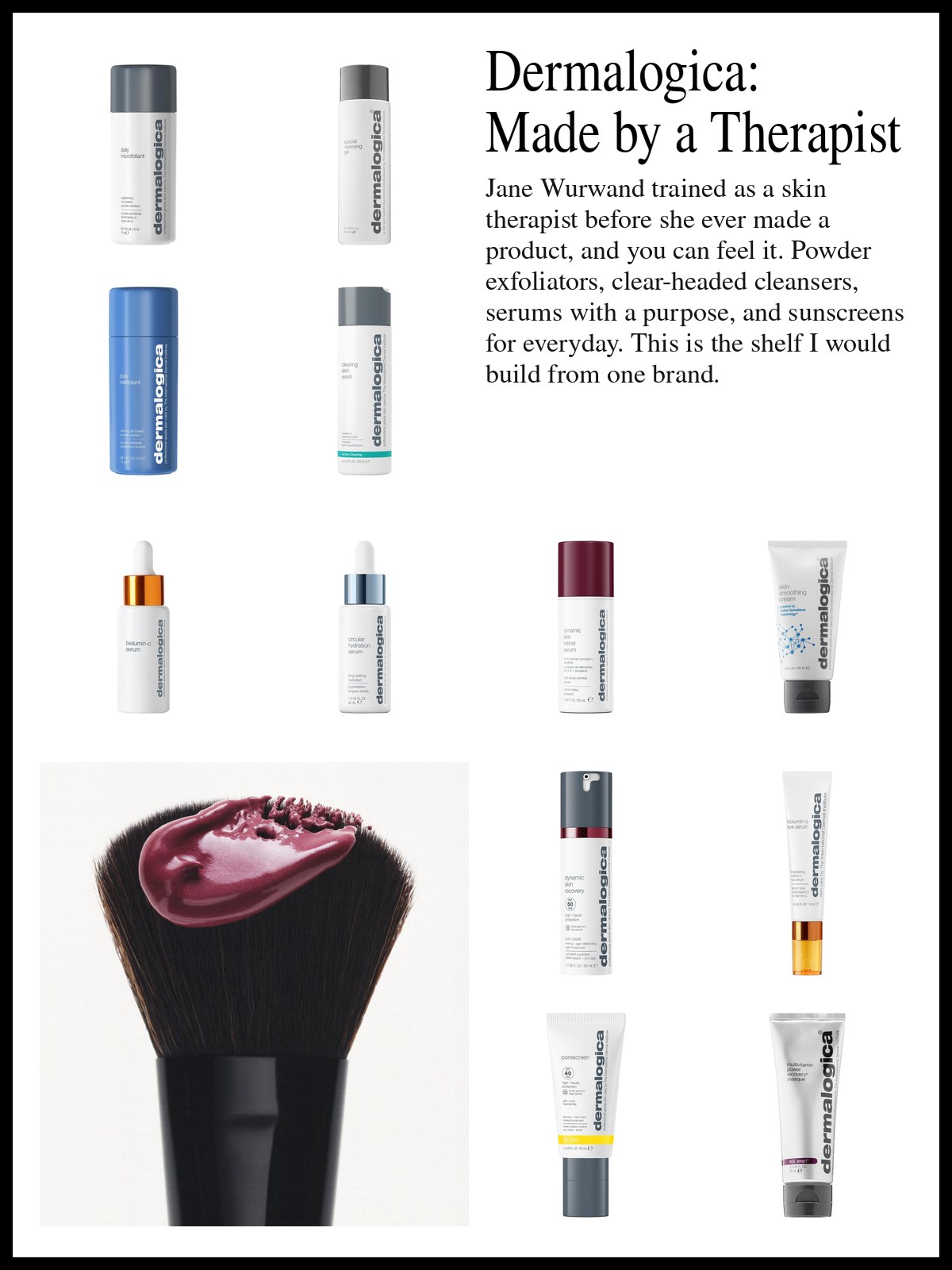
Jane Wurwand did not start as a founder. She started as a skin therapist, and with her husband Ray she opened a school in Marina Del Rey, California, that became the International Dermal Institute by the end of 1983. The products came three years later, in 1986. That order matters to me. Dermalogica is a brand born from the treatment room, and the company still describes itself as one founded by a skin therapist and used by more than 100,000 skin therapists in more than 100 countries.
The clearest expression of that is the Daily Microfoliant, a salicylic acid powder exfoliator that you activate with water and rub gently into a lather. It suits me best twice a week, on a Sunday and again midweek. The Daily Milkfoliant is the same idea in a softer form, an oat-based powder with hyaluronic acid and coconut milk for sensitive, dry and normal skin, which is the version I use when my face feels touchy.
For washing, Dermalogica's Special Cleansing Gel is a sulfate-free foaming gel for all skin types, and the Daily Glycolic Cleanser adds an AHA for dullness and uneven tone. The Acne Clearing Skin Wash is the more targeted option for breakout-prone skin. Active Moist finishes the set as a light moisturizer for oily, combination and dehydrated skin.
Use only one exfoliating step per day, and never two.
Dermalogica cleansers and Daily Microfoliant

Daily Microfoliant, Salicylic Acid Powder Exfoliator for Pores, Spots & Uneven Skin Tone
Dermalogica
$69

Special Cleansing Gel, Sulfate-Free Foaming Gel Cleanser for All Skin Types
Dermalogica
$49

Daily Milkfoliant Exfoliator, Oat Based Powder Exfoliant with Hyaluronic Acid and Coconut Milk for Sensitive, Dry & Normal Skin
Dermalogica
$69

Acne Clearing Skin Wash Cleanser
Dermalogica
$49

Daily Glycolic Cleanser, AHA Brightening Cleanser for Dullness, Uneven Tone & Dark Spots
Dermalogica
$39

Active Moist Moisturizer with Prebiotic Moisture Complex for Oily, Combination & Dehydrated Skin
Dermalogica
$83
Serums and moisturizers with a purpose
Once the surface is clean and calm, this is where the shelf gets interesting. Dermalogica makes serums the way a therapist would recommend them: each one has a clear job, and you can tell what it is from across the room.
BioLumin-C is the vitamin C serum, a stable formula with a peptide and lactic acid for dark spots, firmness and radiance. I use it in the morning and follow it with sunscreen. Circular Hydration is a hyaluronic and polyglutamic acid serum that is lightweight enough to layer under makeup, so it is my pick for a flight or a dry office. Pro Collagen Banking Serum, with polyglutamic acid, is a longer-term choice that you begin using earlier than you think you need to.
The Dynamic Skin Retinol Serum is the night option, made for lines, pores and uneven texture. Start slowly, two nights a week, and use a little less than a pea. Retinol is not for the first week of any new routine.
For moisture, the Skin Smoothing Cream offers 48-hour hydration with hyaluronic acid complex, mallow, cucumber and arnica, and I find it best for normal to dry skin. Dynamic Skin Sculptor is a body serum for crepey skin and loss of firmness. I apply it after a shower, on arms and thighs.
Layer thin to thick, wait a minute between steps, and you will not roll or pill anything.
Dermalogica serums and moisturizers

BioLumin-C Vitamin C Serum, Brightening Stable Vitamin C with Peptide with Lactic Acid for Dark Spots, Firming & Radiance
Dermalogica
$99

Circular Hydration Serum with Hyaluronic Acid & Polyglutamic Acid for Deep Hydration, Plumping & Dewy Skin
Dermalogica
$69

Dynamic Skin Retinol Serum with 3.5% Retinoid Complex for Wrinkles, Pores and Uneven Texture and Tone
Dermalogica
$99

Skin Smoothing Cream Moisturizer for 48-Hour Hydration including Hyaluronic Acid Complex with Mallow, Cucumber and Arnica. Normal to Dry Skin
Dermalogica
$83

Dynamic Skin Sculptor, Pro-NAD+ Firming Body Serum for Crepey Skin, Sagging & Loss of Firmness
Dermalogica
$99

Pro Collagen Banking Serum with Polyglutamic Acid
Dermalogica
$89
Sunscreen, masks and eye care
Sunscreen is the last morning step and the first one I would tell a friend to take seriously. Dermalogica has three here, and they are quite different from each other.
Dynamic Skin Recovery SPF50 is a peptide moisturizer with broad spectrum sunscreen, so it is the one for people who want their morning routine to be one product. Porescreen SPF 40 is a mineral sunscreen with niacinamide for oily and sensitive skin, and it is the one I reach for when my skin runs oily. BioLumin-C Heat Aging Protector SPF50 adds vitamin C to the sun protection, a sensible choice for hot weather and long days outside. The BioLumin-C Eye Serum is a brightening formula for dark circles, fine lines and firmness, and I tap it on with my ring finger.
The MultiVitamin Power Recovery Mask is what I put on after a long trip or a week of bad sleep, a mask for dryness and stressed skin that I use as the directions say. PowerBright Dark Spot Peel is the most active-sounding product here, a peel for dark spots, and I use it sparingly and only after reading the directions twice.
What I would skip: using a peel and a retinol in the same week, or on the same night as your powder exfoliator. Stagger them, watch your skin, and stop if it stings. Sun protection matters even more when you use anything exfoliating, so reapply in daylight.
Dermalogica SPF, masks and eye care

Dynamic Skin Recovery SPF50, Peptide Anti-Aging Moisturizer with Broad Spectrum Sunscreen for Firming & Wrinkles
Dermalogica
$87

BioLumin-C Vitamin C Eye Serum, Brightening Eye Serum for Dark Circles, Fine Lines & Firmness
Dermalogica
$79

Porescreen SPF 40 Mineral Sunscreen with Niacinamide for Oily & Sensitive Skin
Dermalogica
$57

MultiVitamin Power Recovery Mask, Anti-Aging Face Mask for Dryness, Dullness & Stressed Skin
Dermalogica
$69

PowerBright Dark Spot Peel
Dermalogica
$87

Biolumin-C Heat Aging Protector SPF50 with Vitamin C
Dermalogica
$79
How I would build from one brand
If I were building from a single brand, I would pick a cleanser, one exfoliator, one serum for the morning, one for the night, a moisturizer and an SPF. Six products is plenty.
Introduce them one at a time, about a week apart, so you know what is working. Take notes on how your skin looks in daylight, not in the bathroom mirror. If anything stings or turns red and stays that way, please see a doctor or a licensed skin therapist. The whole point of a therapist's brand is that the routine should feel considered, not crowded.
On the mornings when I am short of time, I keep it to cleanser, vitamin C and sunscreen. On Sunday nights I add the mask and put my phone in another room. That rhythm is easy to keep up, and it is easy to adjust when the seasons change, with a richer moisturizer in winter and a lighter one in summer.