This CurrentBody LED mask edit covers the brand's face, neck and body devices plus LED, microcurrent and RF companions from other brands. I wrote it for anyone who wants a light routine they will actually keep up.
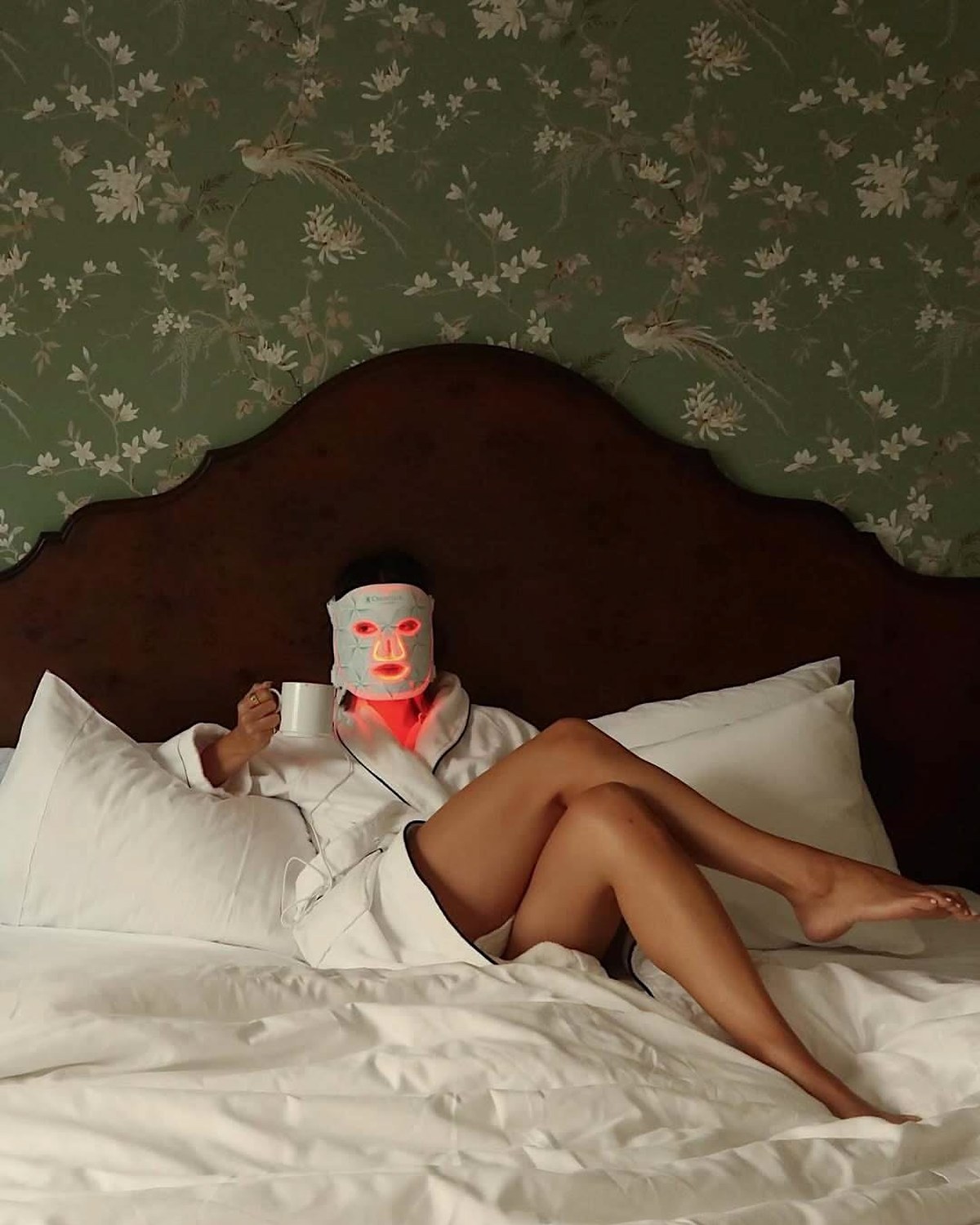
CurrentBody LED Mask: The Hands-Free Idea That Began in 2009
A hands-free idea from 2009
Start in 2009, the year CurrentBody debuted, with a founder named Laurence Newman and a fairly simple observation. LED light was a technology skin clinics had trusted for years, but the home devices of the time were handheld, which meant a long treatment time and a habit that was hard to keep. So the brand dreamed up something hands-free, made from flexible silicone. That is the whole story, and I like how unglamorous it is.
I keep coming back to a line Newman gave Vogue: home-use devices are all about consistency. It is a founder thinking about the Tuesday night you would rather not bother, not the launch photo. For a CurrentBody LED mask, that means a flat silicone shell that straps on, a controller, and a programmed 10-minute timer that shuts itself off. The brand also runs its own testing program, Veritace, which checks every LED before it goes in and every finished mask after.
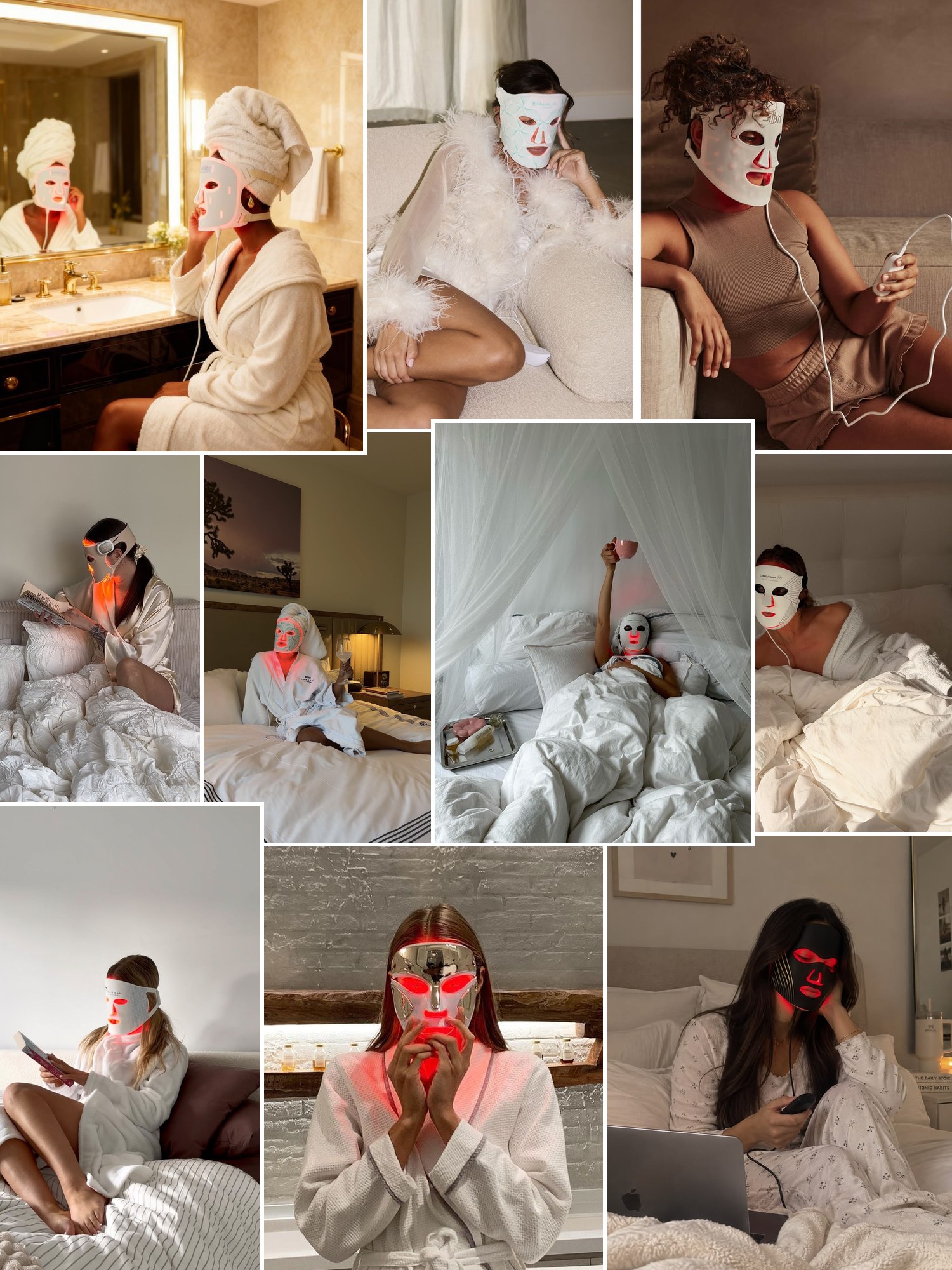
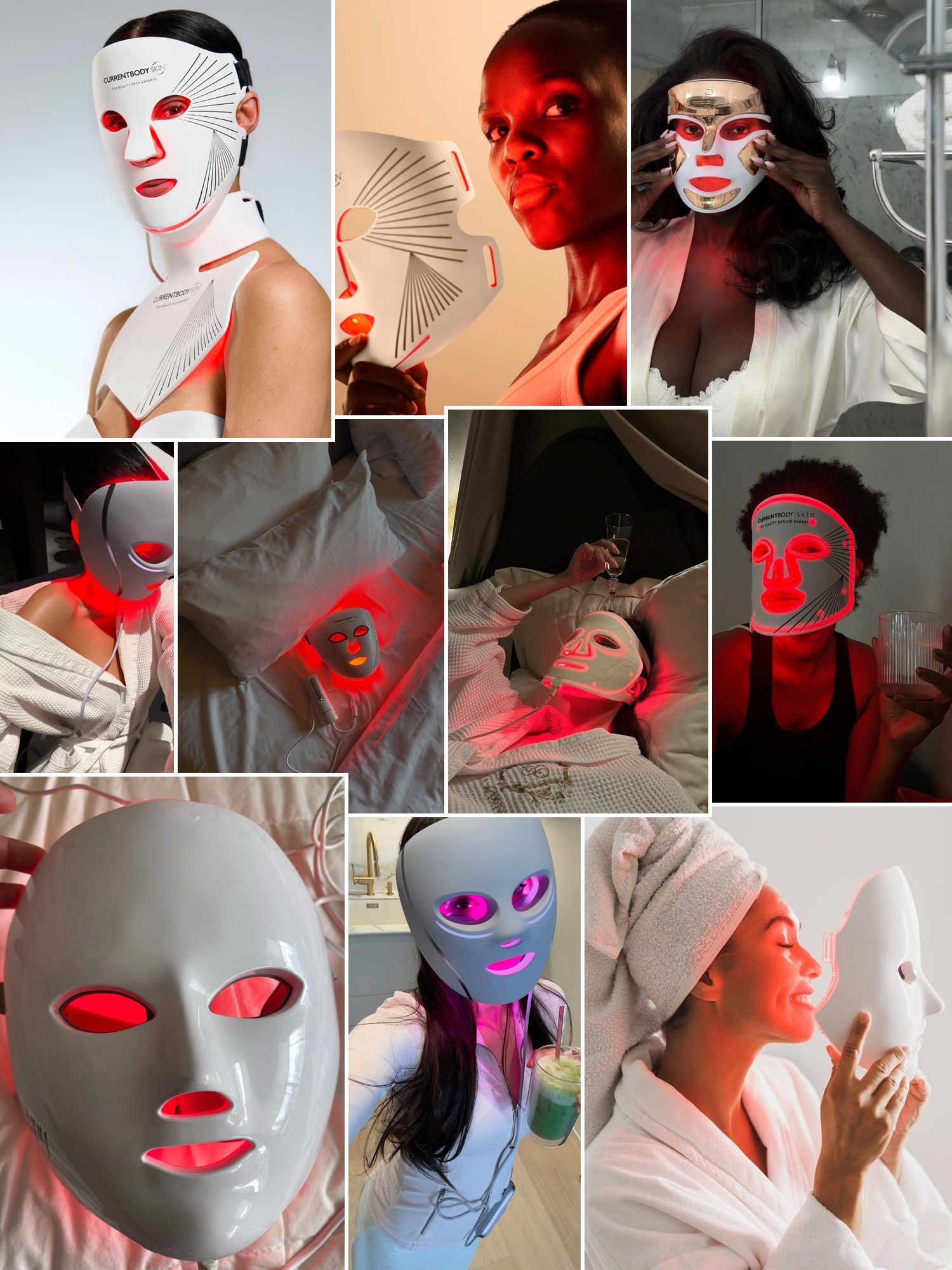
Now the masks themselves. The CurrentBody Skin Series 1 is where the line began in 2019, using red (633nm) and near-infrared (830nm) light. The Series 2 adds a deep near-infrared (1072nm) wavelength, and the Series 3 goes to six wavelengths with a MyDose screen that lets you choose and calculates the dose. In my fashion dreams, October is a mask on, a blanket, a long podcast and nowhere to be. If you break out, the Anti-Acne Series 1 and the blue Series 2 pair blue (415nm) with red (633nm). The LED Eye Mask runs short 3-minute sessions, and the Hand Mask uses red and near-infrared for a 10-minute treatment.
Practical tip: pick by the habit, not the specs. If you want the simplest routine, the Series 1 or 2 is a clean place to begin. If you like to fiddle with settings, the Series 3 is the one to read about.
CurrentBody LED masks

LED Red Light Therapy Face Mask: Series 2
CurrentBody Skin
$469.99

LED Red Light Therapy Face Mask: Series 1
CurrentBody Skin
$379.99

LED Red Light Therapy Face Mask: Series 3
CurrentBody Skin
$569.99

LED Blue Light Therapy Face Mask: Series 2
CurrentBody Skin
$469.99

Anti-Acne LED Face Mask: Series 1
CurrentBody Skin
$379.99

LED 4-in-1 Zone Facial Mapping Mask
CurrentBody Skin
$624.99

LED Eye Mask
CurrentBody Skin
$249.99

LED Hand Mask
CurrentBody Skin
$249.99
Neck, chest and the rest of the CurrentBody kit
The Series 2 neck and chest mask shares the face mask's three wavelengths: red, near-infrared and deep near-infrared. It sits next to the Neck and Décolletage Series 3 with its MyDose screen, and the Face and Neck Kit, which pairs a face mask with a neck mask in one box. Same silicone idea, a different part of the body, and the same ten minutes of patience.
Then the range gets more curious. There is a flexible LED Light Therapy Panel with blue, red, near-infrared and deep near-infrared wavelengths, and the Tighten and Brighten Kit, which pairs an LED mask with a slim black and silver RF device. The RF device on its own is FDA cleared. The Infrared Sauna Blanket, with a cotton towel insert and settings for time and temperature, and the Leg Recovery Compression Boots, with five modes, are for after a long walk or a long flight.
In my fashion dreams, this is the October travel bag: a silk robe, a neck mask flat in its dust bag, the compression boots waiting at the hotel. Flat silicone really does pack well, which Vogue noted about the face mask.
Before you buy any of it, check the fit of the neck piece against your collarbone and read the session guide on the product page, because the timings differ from device to device.
What I would skip: the sauna blanket and the boots if you only want skin help. They are good at what they do, which is not skin.

LED Neck & Décolletage Mask: Series 2
CurrentBody Skin
$419.99

LED Neck & Décolletage Mask: Series 3
CurrentBody Skin
$509.99

Face & Neck Kit: Series 2
CurrentBody Skin
$799.99

RF Radio Frequency Skin Tightening Device
CurrentBody Skin
$448.99

LED Light Therapy Panel
CurrentBody Skin
$1,099.99

Infrared Sauna Blanket
CurrentBody Skin
$699.99

Tighten & Brighten Kit
CurrentBody Skin
$768

Leg Recovery Compression Boots
CurrentBody Skin
$799.99
Other LED face masks worth comparing
A CurrentBody LED mask is not the only silicone mask on the shelf, and a fair edit looks at the neighbors. Omnilux is the obvious one: the Contour is a white silicone mask printed with a mint leaf, with 132 medical-grade LEDs in red and near-infrared, and the Clear Skin is its blue and red version, FDA cleared for mild-to-moderate acne.
The shapes vary more than the specs suggest. The Shark CryoGlow is slate navy with a gold constellation detail and under-eye cooling. The Dr. Dennis Gross FaceWare Pro has a polished rose-gold nose bridge and a three-minute treatment. HigherDOSE does a bright blue silicone one with three elastic straps, and SolaWave has a soft pink one for wrinkles. Therabody's TheraFace Mask adds vibration with 648 LEDs, and the FOREO FAQ 202 is a second-skin mask with seven light therapies.
Test them the way I would: hold each one up and look at the eye and mouth openings, then picture the strap against your hairline. A mask you dread putting on gets worn twice. Check the cord length against where you actually sit, and read the timer, because three minutes and ten minutes make for very different evenings.
What I would skip: a mask with a rigid shell if you plan to lie down in it. Flexible silicone moves with your face.

CryoGlow Under-Eye Cooling + LED Anti-Aging Red Light & Skin Clearing Mask
Shark
$349

Contour Face Antiaging Red and Near Infrared LED Mask
Omnilux
$395

Clear Skin Blue and Red Light Therapy Face LED Mask
Omnilux
$395

DRx SpectraLite FaceWare Pro 3-Minute LED Device
Dr. Dennis Gross Skincare
$455

Red Light Face Mask for Fine Lines & Glowing Skin
HigherDOSE
$349

TheraFace Mask
Therabody
$649.99

FAQ 202 LED Face Mask
FOREO
$799

Wrinkle Retreat Light Therapy Face Mask
SolaWave
$399
Wands, spot lights and eye devices
Handheld LED is the older format, and it still makes sense for small jobs. Newman said as much to Vogue: clinic LED existed long before, but the handheld devices meant a long treatment time. That is exactly why a handheld is best for one spot, not a whole face.
The spot treatments are the easy ones to place. The Omnilux Mini Blemish Eraser is a small round white device ringed in teal with blue and red light, and the SolaWave Bye Acne sits on a suction stand with a blue and red light panel in 3 minutes. The Omnilux Skin Corrector is the mint-patterned round one with red and near-infrared light.
Around the eyes and lips, the Dr. Dennis Gross pieces are shaped for the job: the LipWare Pro with 56 red LEDs, and the curved LED EyeCare Max Pro with 96 red LEDs, both FDA cleared. The SolaWave 4-in-1 wand in gold folds red light, galvanic current, warmth and massage into one slim body. The HigherDOSE Pro Laser Renewal Wand has an 808nm laser with a cooling attachment, and the NuFACE Trinity+ red light attachment clicks onto the Trinity+ device.
Test: hold the head against the area you mean to treat. If you can not rest the device there without your arm tiring, a hands-free mask is better for you.
What I would skip: a wand for a whole-face routine. It will feel like a lot of arm time.

Mini Blemish Eraser Blue and Red Light Therapy LED Device
Omnilux
$95

DRx SpectraLite LipWare Pro LED Device
Dr. Dennis Gross Skincare
$148

Pro Laser Renewal Wand for Firming, Skin Clearing + Depuffing
HigherDOSE
$299

4-in-1 Skin Care Wand
SolaWave
$169

Bye Acne 3-Minute Light Therapy Acne Spot Device
SolaWave
$89

Trinity+ LED Red Light Wrinkle Reducer Attachment
NuFACE
$160

Skin Corrector LED Device
Omnilux
$95

DRx SpectraLite LED EyeCare Max Pro
Dr. Dennis Gross Skincare
$199
Microcurrent and radio frequency, the lifting side
Microcurrent is a different tool from light, and I think it deserves its own shelf. NuFACE built the Trinity+ Starter Kit for the face and neck with a gel primer, a brush and a serum, and the FIX MicroWand is the slim one for the eye and lip area. Both are about a few minutes of small, deliberate strokes.
FOREO's BEAR 2 is the teal one with two toning spheres and four types of microcurrent for the 69 muscles of the face and neck. Its FAQ 101 in amethyst mixes heated radio frequency with pulsed LED. Therabody's TheraFace PRO Set puts eight treatments on one handle, including microcurrent, LED and percussive therapy, plus a carry case. The LUCE 4T has a red and blue LED panel with adjustable microcurrent, warmth and vibration, and the Bt-sculpt GEN2 and the MyoLift Mini are the straightforward handheld options.
I imagine this as the Sunday evening routine, a robe and a conductive gel, and a slow lap around the cheekbones before the week starts.
A buying test: look at the controls. Intensity levels you can read in low light matter more than the extra modes. I would also check whether the device comes with its gel, since microcurrent needs a conductive layer between the device and skin.
What I would skip: a device with attachments you will never open. Pick the one you will take out of the drawer on a tired night.

TRINITY+ Starter Kit Lift & Tighten Facial Microcurrent Device
NuFACE
$395

FIX MicroWand Microcurrent Device
NuFACE
$175

BEAR 2 Facial Toning Microcurrent Device
FOREO
$399

FAQ 101 Amethyst Professional Radio Frequency & LED Facial Rejuvenation
FOREO
$390

TheraFace PRO Set
Therabody
$419.99

LUCE 4T Therapy PRO Face and Neck Microcurrent Wand
LUCE BEAUTY
$99

Bt-sculpt GEN2 Microcurrent Sculpting
Bio-Therapeutic
$345

MyoLift Mini Microcurrent Facial Toning Device
7e Wellness
$329
Which CurrentBody piece I would start with
I would choose by habit. If I wanted the simplest routine, I would take the Series 2 face mask, because it uses 633nm, 830nm and 1072nm light and a timer that does the thinking. If I liked screens and settings, the Series 3 and its MyDose controls. If breakouts were the problem, the blue Series 2.
Then I would add the neck mask, since the face is only half of what you show to the room in a scarf season.
Newman started in 2009 with a clinic technology and a strap. Seventeen years later, the line is a drawer of masks, and the idea is the same: make it easy enough that you actually do it.