This bathroom vanity selects that covers single, double, floating, furniture-style and powder room vanities, with notes on height and tops.
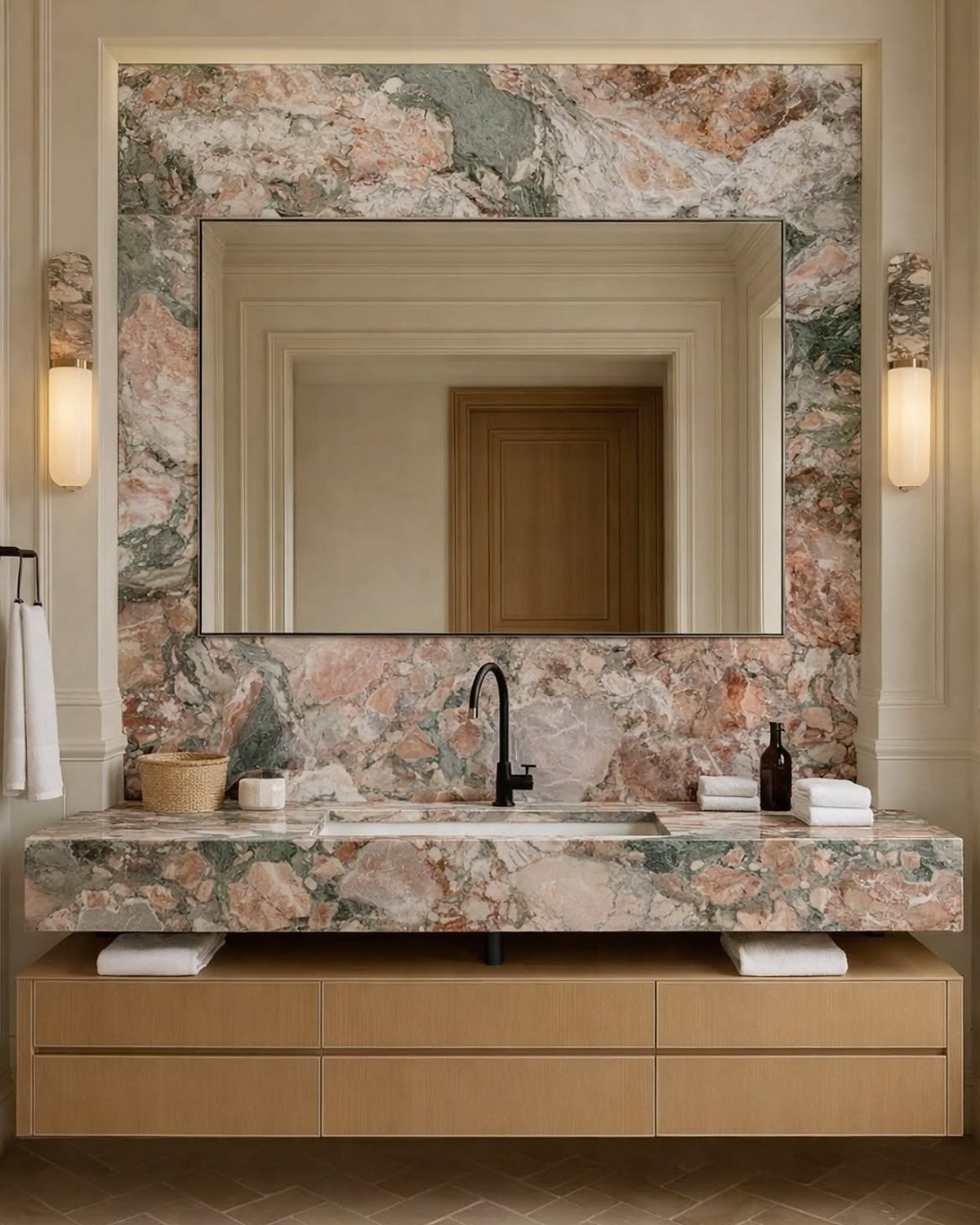
Bathroom Vanity: From Washstand and Pitcher to the Built-In Cabinet
A bathroom vanity starts as a bedroom problem
In 1874 an American inventor named Erastus Ewing filed a patent, number 156,213, for a compact piece of furniture meant to hide everything away behind doors: a kind of convertible vanity table with a mirror. Before that, the washing arrangement in most houses was a washstand, a small table or cabinet made for holding a wash basin and a water pitcher. Then plumbing moved indoors and the pitcher went away. The cabinet stayed.
That is the whole story of the bathroom vanity, and it explains why the good ones still look like furniture. A dresser topped out around 30 to 32 inches because that is where a basin and pitcher sat, and that height followed the cabinet into the bathroom. Today most people shopping for one are choosing between that older height and the 36-inch comfort height borrowed from kitchen counters.
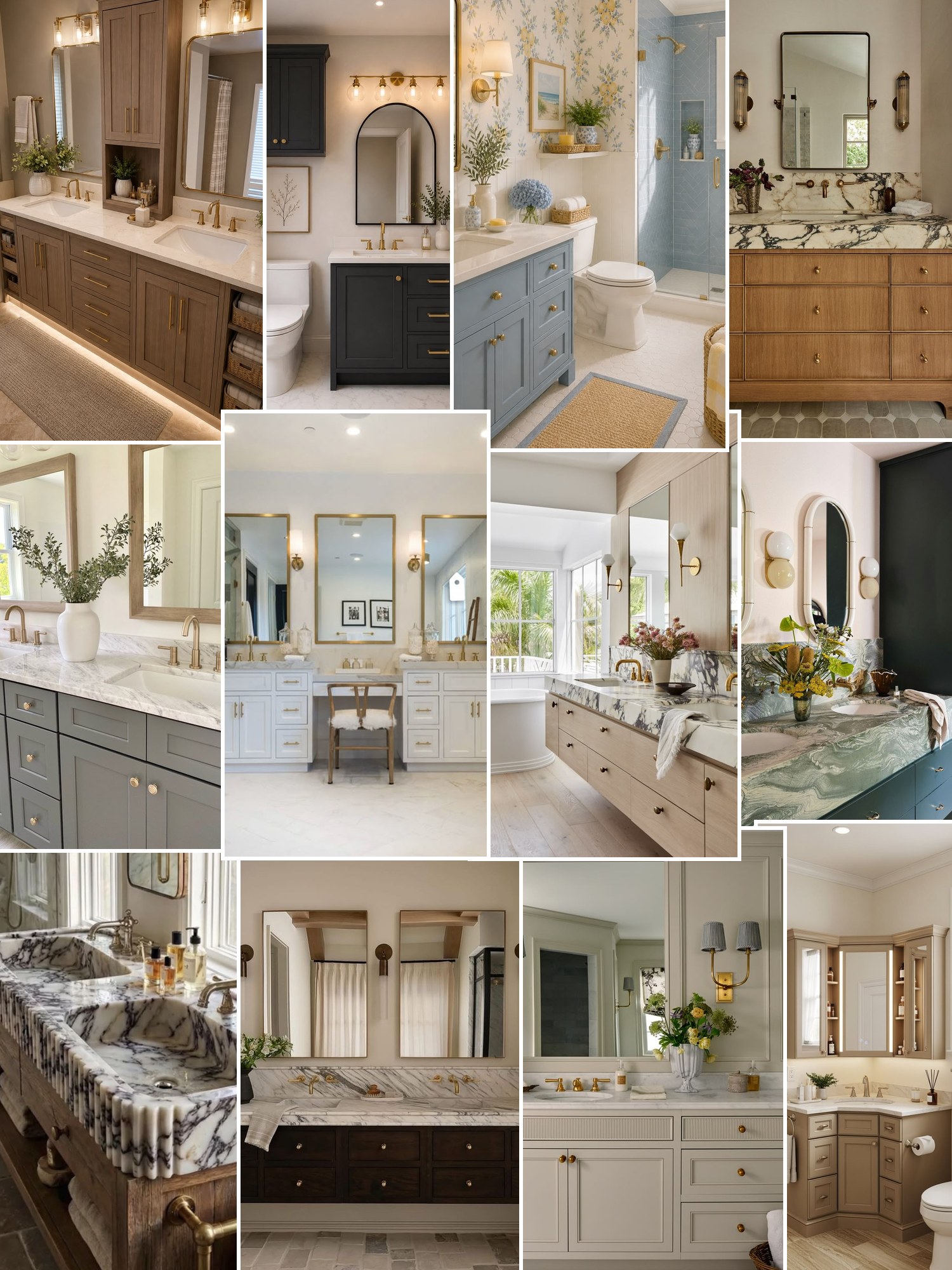
Single-sink vanities are where I would begin, because they suit most guest baths and many primary ones. The Graham from West Elm is toasted oak with two doors over an open lower shelf, which gives you a place for a basket of rolled towels. The Ellington is blonde fluted wood with three drawers and slim tapered legs, the softer, curvier option. Pottery Barn's Scarlett has carved fronts, ring pulls and bun feet under a white marble top, and the Somerset in natural oak is more of a cabinet, with paneled doors. The Keri in smoke gray with matte black pulls and the Maisie in walnut with satin brass are the two I would pick for a room that already has strong metal fixtures. The Gabi in warm walnut has slatted drawer fronts and splayed legs, and the Norton is a white shaker with a Carrara-look engineered top.
Before you decide, check the width against the door swing and the toilet. Thirty inches is often plenty, and 36 gives you real elbow room.
Single-sink bathroom vanities

Graham Single Bathroom Vanity
West Elm
$1,099

Ellington Single Bathroom Vanity
West Elm
$1,479

Scarlett Single Sink Vanity
Pottery Barn
$1,599

Somerset Single Sink Vanity
Pottery Barn
$1,749

Keri 36" Single Bathroom Vanity Set
AllModern
$1,099

Maisie 36" Single Bathroom Vanity Set
AllModern
$1,599

Gabi 36" Single Bathroom Vanity
Ove Decors
$967

Norton 36-in White Undermount Single Sink Bathroom Vanity with Carrara Engineered Marble Top
allen + roth
$699
Double-sink vanities for shared mornings
Double vanities only make sense at 60 inches wide or more, so the first test is a tape measure on the wall, not a mood board. Under that, two sinks just means two people hovering.
The long, furniture-like ones are the nicest. West Elm's Anton is natural wood with doors and center drawers on a slim base, and its Mid-Century double in acorn has brass pulls and tapered legs. Pottery Barn's Leah Heirloom in natural oak has paneled doors and a white marble top, while the Belmont in white painted wood has a drawer bank and silver pulls for a calmer, more traditional room. For something darker, the Alsup in dark weathered oak has brass pulls and door cabinets, and the Nova in reeded birch carries a Carrara marble top on slim legs. The Gabi double in warm walnut is slatted with splayed legs, and the Dondi in walnut has six drawers, which is what I would want if two people share it.
Look at the drawer layout, not just the top. Center drawers are the most useful storage, so make sure the sink plumbing does not eat them. Check that each sink has real counter on either side, so a toothbrush cup has somewhere to go.
What I would skip: a 60-inch double in a room where the door and tub already crowd the wall. One wide sink with a long counter is easier to live with than two cramped ones.

Anton Double Bathroom Vanity
West Elm
$2,699.99

Mid-Century Double Bathroom Vanity
West Elm
$2,337.3

Leah Heirloom Double Sink Vanity (60")
Pottery Barn
$3,399

Belmont Double Sink Vanity (60")
Pottery Barn
$2,999

Alsup 60" Double Bathroom Vanity
Highbury Furnishings
$2,244

Nova 60" Carrara Marble Double Bathroom Vanity
Joss & Main
$2,748

Gabi 60" Double Bathroom Vanity
Ove Decors
$1,633

Dondi 60" Walnut Double Bathroom Vanity
AllModern
$2,488
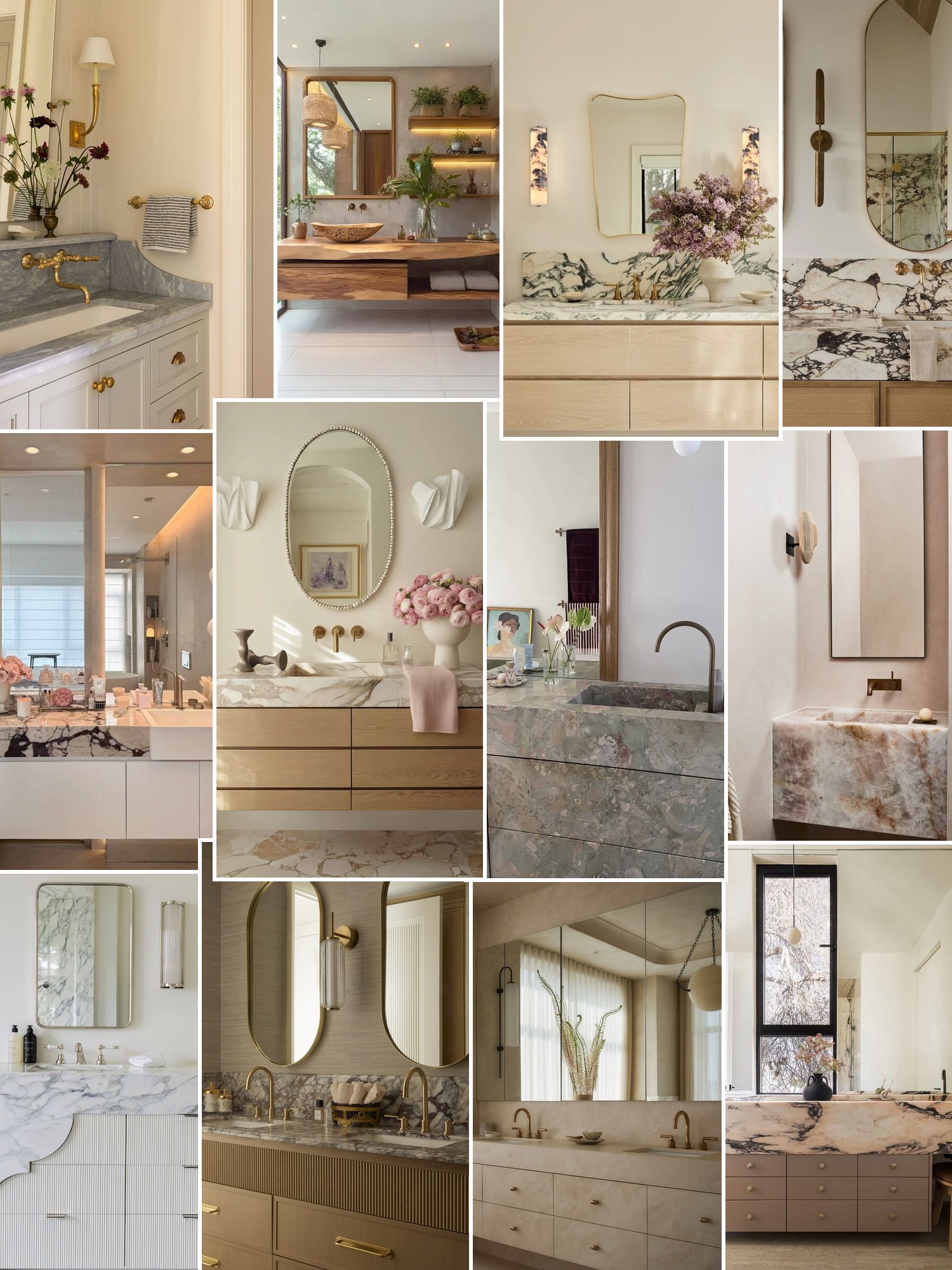
Floating wall-mount vanities that free the floor
Wall-hung vanities solve a small-room problem: you can see the floor, so the room reads larger. The catch is the wall. These mount with a cleat or rail fastened into studs, so ask whoever is installing it where the studs are before you order.
The Ellington floating version is the one I would go to first, in blonde fluted wood with three curved drawers. The Collins in walnut has two wide drawers and a clean white top, and the Noam is a 42-inch set with a navy drawer and an open white shelf, a nice place for a folded hand towel. The Anelie in oak with gold pulls has a reeded two-drawer front, and the Nova in brown reeded birch has brass bar pulls under a Carrara marble top. The Kambrey is the sculptural one, with a rippled wood front and an integrated solid surface basin. The Mitchell pairs blonde wood with a white quartz top, and the Diella is a sage green fluted two-drawer vanity with a dark gray top.
On the top material, I would think about what lands on it. Marble is calcium carbonate, and acid from lemon, vinegar or some cleaners can leave an etch mark that is a physical change to the finish, not something that wipes off. Quartz is nonporous, though it can still chip on an exposed edge. If you love the marble look on a daily-use bath, a honed finish hides etching better.
What I would skip: a floating vanity if the wall behind it is thin or hides a pipe run you cannot move.

Ellington Floating Single Bathroom Vanity
West Elm
$1,479

Collins 36" Walnut Single Bathroom Vanity
AllModern
$1,299

Noam 42" Wall-Mounted Single Bathroom Vanity Set
AllModern
$1,599

Anelie 36" Floating Bathroom Vanity
Joss & Main
$1,060

Nova 48" Carrara Marble Single Bathroom Vanity
Joss & Main
$2,118

Kambrey 31.5" Wall Mounted Single Bathroom Vanity
Hokku Designs
$2,360

Mitchell 30" Wall Mounted Single Bathroom Vanity Set
AllModern
$1,049

Diella 48" Wall-Mounted Single Bathroom Vanity Set
AllModern
$1,918
Furniture-style vanities on legs
Legs change the whole feeling of a vanity. You see the floor underneath, the piece looks like something you could have found in a bedroom, and that is exactly where the form began, with the washstand on its three or four legs. Chippendale even designed corner washstands in an elaborate rococo fashion, so none of this is new.
West Elm's two Mid-Century vanities in acorn are the easy ones: tapered legs, one with an open storage shelf under two drawers, one with two doors and black pulls. Pottery Barn's Everson is an open brass-finish frame with a lower shelf and a white marble top, the most washstand-like of the lot. The Summerville is a warm brown chest on turned legs with drawers and a marble top. Anthropologie's Spindle is a tobacco-stained chest with turned legs, brass pulls and a marble top, listed at 36 inches high, 41.5 wide and 24 deep. The Mari in natural eucalyptus has a curved front on rounded feet. The Jewell is vintage green with antique brass pulls on open legs, and the Ariane in chestnut oak has an open shelf and a black stone-look top.
In a shop or on a spec sheet, look at the height to the counter, not the cabinet box, and not the rim of a vessel bowl if there is one. A 36-inch counter with a bowl on top can feel tall.
What I would skip: an open lower shelf if you tend to leave things out. Closed doors hide a lot of clutter.

Mid-Century Open Storage Single Bathroom Vanity
West Elm
$963.9

Mid-Century Single Bathroom Vanity
West Elm
$699.97

Everson Single Sink Vanity
Pottery Barn
$1,599

Summerville Single Sink Vanity (36")
Pottery Barn
$1,999

Spindle Single Bathroom Vanity
Anthropologie
$1,998

Mari Eucalyptus Single Bathroom Vanity
AllModern
$2,036

Jewell 30" Single Bathroom Vanity Set
Sand & Stable
$420

Ariane 36" Cedar Single Bathroom Vanity
AllModern
$2,099
Small vanities for powder rooms and tight baths
Powder rooms are where I would stop worrying about storage and start caring about proportion. A guest only needs soap, a hand towel and somewhere to put a ring down, so a narrow vanity does the job without crowding the toilet.
The Ellington at 16 inches is the smallest of these, a rounded blonde fluted cabinet with a pedestal-style white top. Pottery Barn's Leah Heirloom at 27 inches is compact oak with three drawers and a marble top, and the Cayman at 26 inches has an open cubby, which is a good place for a basket of spare hand towels. The Gabi at 24 inches in rustic ash is slatted and light, and the Alsup at 24 inches in eucalyptus has two doors on tapered legs. The Kiara at 24 inches pairs blonde wood with a Carrara marble top. For the tightest spots, the Joshua at 20 inches in black has a tilt-out drawer, and Project Source's Euro at 18 inches is a slim sandstone single door with a cultured marble top and an integrated bowl.
Measure the door swing and the clear floor in front of it before you pick. In October, with guests coming for the holidays, I would put a small tray and a good soap on the top and leave it at that.
What I would skip: a vessel bowl on a short cabinet. It adds height above the counter and can make a small room feel top heavy.

Ellington Single Bathroom Vanity (16")
West Elm
$1,179

Leah Heirloom Single Sink Vanity (27")
Pottery Barn
$1,599

Cayman Single Sink Vanity (26")
Pottery Barn
$449.97

Gabi 24" Single Bathroom Vanity
Ove Decors
$723

Alsup 24" Eucalyptus Single Bathroom Vanity
Highbury Furnishings
$738

Kiara 24" Carrara Marble Single Bathroom Vanity
AllModern
$799

Joshua Modern 20" Wood Small Bathroom Vanity with Sink and Tilt-Out Drawer
GDFStudio
$271.99

Euro 18-in Sandstone Single Sink Bathroom Vanity with White Cultured Marble Top
Project Source
$179
The one I would measure for first
I would do this in order. Measure the wall and the door swing, then choose the width. Decide on 32 or 36 inches by who stands at the sink every day. Then look at the top: quartz if you want to stop thinking about it, marble if you will wipe it down and accept a patina.
After that it is just taste. Wood and brass for a warm room, white and black for a crisp one.
A bathroom vanity began as a stand for a pitcher, so I would still buy the one that looks like it belongs in the room next door. If you want to keep browsing, I also put together Vanity Chair and Murphy Bed.