A microcurrent facial at home only shows results if you keep doing it, a few minutes most days for weeks. Here are the devices, the conductive gels and serums they need, and the firming creams to follow with, plus the safety notes to read first.
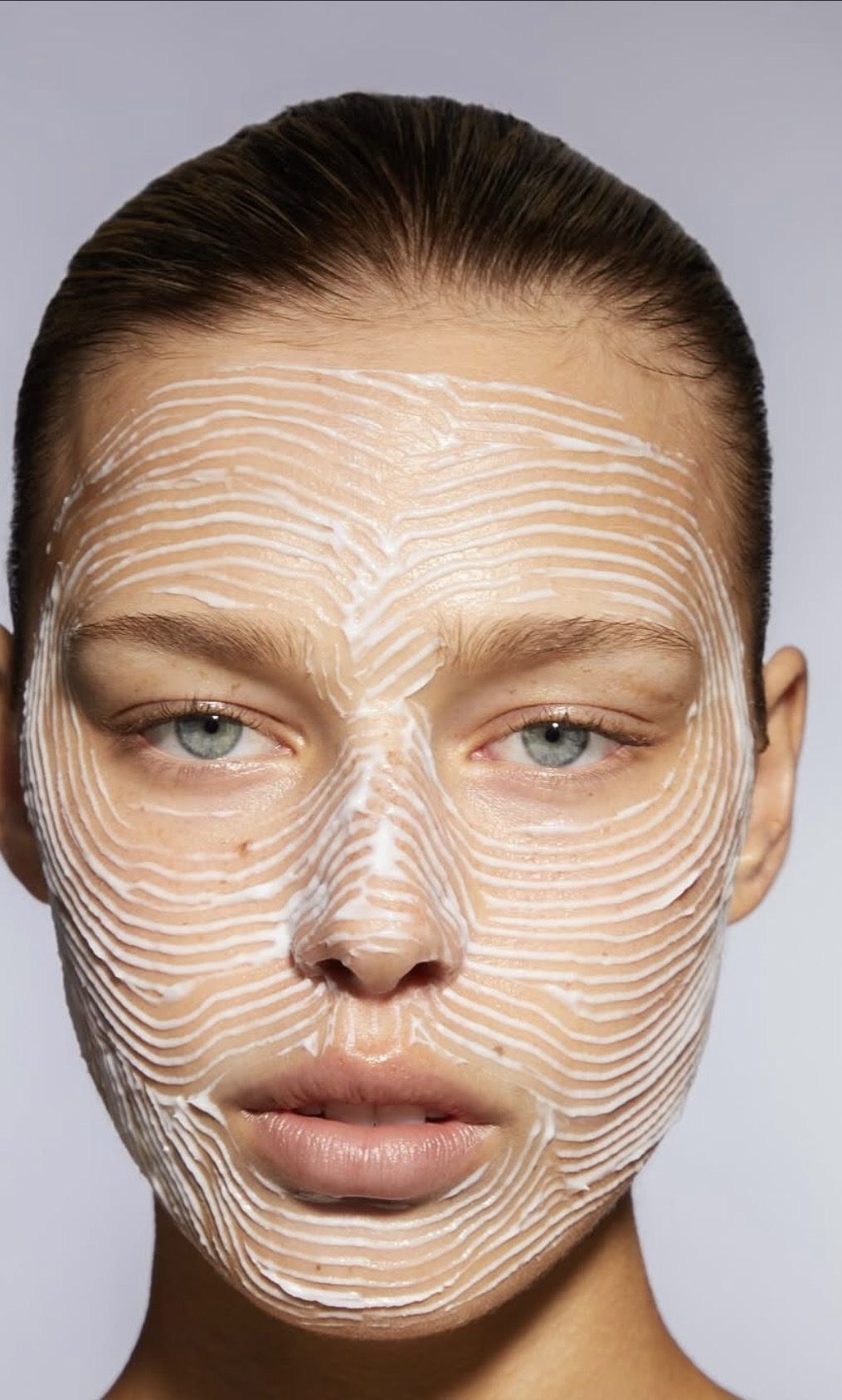
A Microcurrent Facial at Home Is a Habit, Not a One-Time Fix
NuFACE was founded in 2005 by an aesthetician, Carol Cole, with her daughters Tera and Kim, and two years later its handheld device was cleared by the FDA. Before that, microcurrent was something you booked at a spa. It uses a very low electrical current, one you barely feel, which is meant to stimulate the muscles of the face. Many people find their face looks a little more lifted and defined after a session. The results are subtle, they build with regular use, and they fade if you stop. A microcurrent facial at home is a habit, like brushing your teeth, not a one time fix.
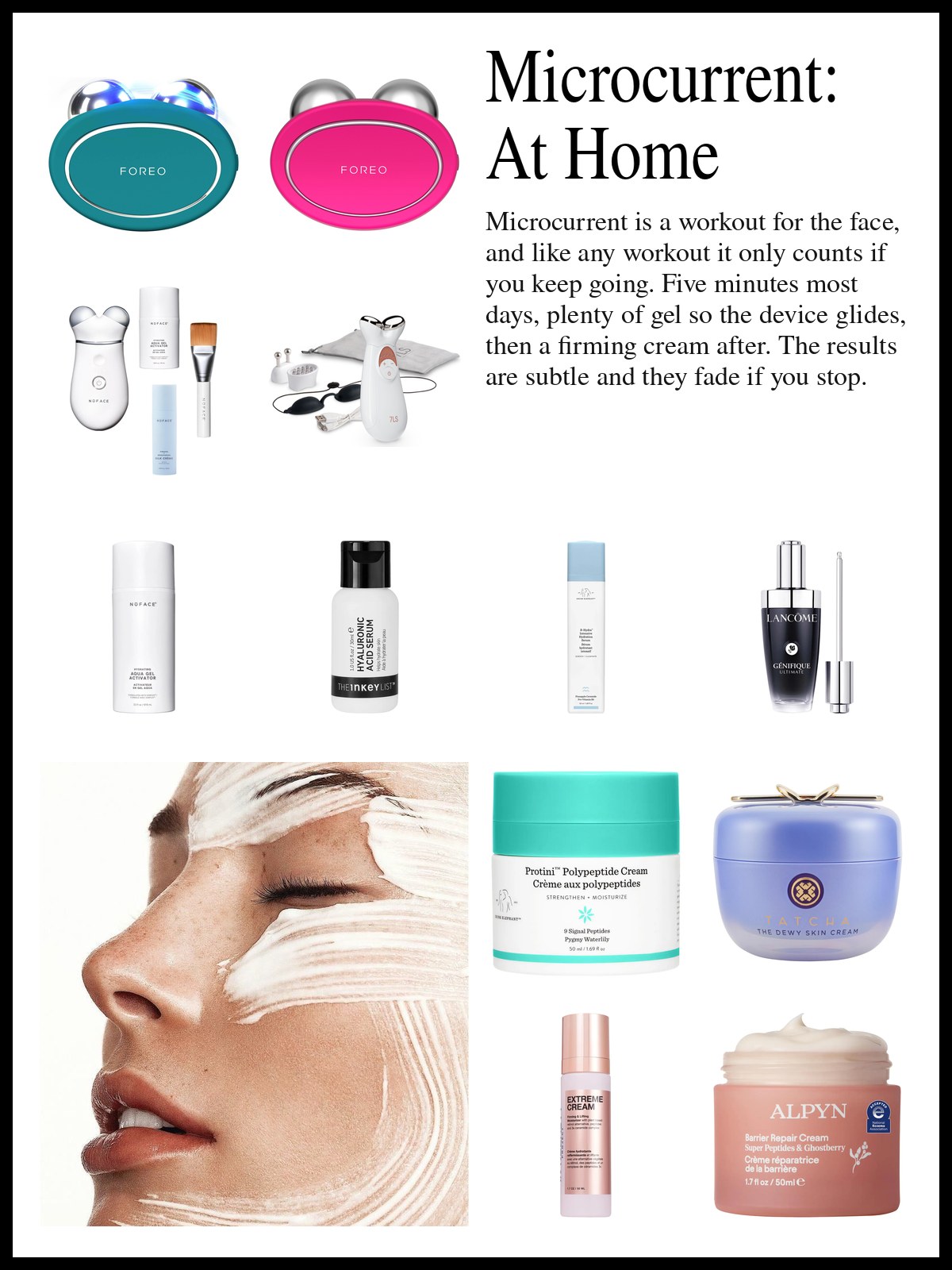
The devices differ mostly in shape. FOREO's BEAR 2 and the original BEAR are rounded, with two spheres that glide over the skin, and they connect to an app. NuFACE's TRINITY+ Starter Kit is a handheld with two small spheres, and it comes as a kit so you have what you need to begin. 7LS by HoMedics's ReSCULPT combines microcurrent with light therapy. 7E Wellness's MyoLift Mini is compact and easy to travel with, and their MyoLift QT Plus is a facial toning device in the same family.
A few important safety notes first. Most microcurrent devices are not for use during pregnancy, or if you have a pacemaker, epilepsy or metal implants in the face, so read the warnings before you buy. Avoid the eye area itself, and stop if anything feels painful or your skin reacts.
Then follow the device's own routine. Most take about five minutes.
Microcurrent devices

BEAR 2 Advanced Microcurrent Facial Toning Device
FOREO
$399

BEAR Smart Microcurrent Facial Toning Device
FOREO
$329

NUFACE® TRINITY+ Starter Kit Lift & Tighten Facial Microcurrent Device
NuFACE
$395

ReSCULPT Microcurrent Light Therapy Device
7LS by HoMedics
$299

MyoLift Mini Microcurrent Device
7E Wellness
$329

MyoLift QT Plus Facial Toning Device
7E Wellness
$229
Gels and serums to glide on
Microcurrent needs a conductive layer between the device and your skin. Without it the current cannot travel properly and the spheres drag. This is the step most people skimp on, and it matters. Use more than seems reasonable, enough that you can see a clear, wet layer.
NuFACE's Aqua Gel Activator is made for exactly this, a hydrating gel that stays wet while you work. Water-based hyaluronic acid serums are the other option, since they stay slick. The INKEY List's Hyaluronic Acid serum is simple and light. Drunk Elephant's B-Hydra is an intensive hydration serum with hyaluronic acid, and Glow Recipe's Plum Plump is a hyaluronic serum with a thicker, gel texture. Biossance's Probiotic Gel is a lightweight gel moisturizer, and Lancôme's Génifique Ultimate is a recovery serum for the skin barrier.
Work one section of the face at a time, reapplying as it absorbs, since a patch that dries out stops conducting. Glide upward and outward, from the jaw toward the ears, from the corners of the mouth toward the cheekbones, and from the brows toward the hairline, and hold for a couple of seconds at the end of each stroke if your routine says to.
Avoid oils and rich creams underneath, which can block the current. Check the device instructions for which products work with it, since some brands test only with their own gels, and a few warn against certain ingredients. A small pump bottle of gel is easier to use one handed than a jar.
Conductive gels and serums to glide on

Hydrating Microcurrent Aqua Gel Activator
NuFACE
$55

Hyaluronic Acid (HA) Hydrating Face Serum
The INKEY List
$13

B-Hydra™ Intensive Hydration Serum with Hyaluronic Acid
Drunk Elephant
$56

Génifique Ultimate Recovery Serum for Skin Barrier Repair
Lancôme
$135

Probiotic Gel Lightweight Non-Comedogenic Moisturizer with Glycerin + Squalane
Biossance
$49

Plum Plump™ Hyaluronic Acid Hydrating Serum
Glow Recipe
$38
Firming creams for after
Once you have finished, rinse or wipe off the gel and follow with a moisturizer. These are the ones I like after a session, mostly with peptides, which fit the goal of firmer looking skin.
Drunk Elephant's Protini is a polypeptide moisturizer. Tatcha's Dewy Skin Cream is hydrating and firming, a good match for dry skin. Innbeauty Project's Extreme Cream is a barrier repair moisturizer, and ALPYN's Super Peptide moisturizer is made for dry, easily irritated skin. First Aid Beauty's Ultra Repair Firming Day Cream has peptides, niacinamide and collagen.
Caudalie's Resveratrol-Lift Cashmere cream is a retinol alternative with a soft texture. Clarins's Extra-Firming Energy moisturizer comes in a refillable jar, and Dermalogica's Phyto Nature Oxygen Cream has adaptogens and squalane.
What I would skip: a session right after a peel, a strong retinoid night or any in-office treatment. Give irritated skin a few days. I would also skip expecting a device to do the work of sleep, water and sunscreen. It can make skin look a little more lifted for a while, but it does not replace the basics. And skip the forehead or neck if your device's routine does not include them. Each routine is designed around what that device was tested for, so stick to it.
In the morning, a moisturizer from this list under sunscreen is all you need. Save the device for evenings, when you have five quiet minutes and no makeup to work around.
Firming creams for after

Protini™ Polypeptide Firming Refillable Moisturizer with Peptides
Drunk Elephant
$72

The Dewy Skin Cream Hydrating & Firming Refillable Moisturizer
Tatcha
$74

Extreme Cream Firming & Barrier Repair Anti-Aging Refillable Moisturizer with Peptides + Ceramides
Innbeauty Project
$50

Super Peptide Barrier Repair Moisturizer for Eczema, Wrinkles, Firming & Sensitive Skin
ALPYN
$62

Resveratrol-Lift Firming Retinol Alternative Cashmere Moisturizer with Pro-Collagen Multi-Peptides
Caudalie
$69

Ultra Repair Firming Day Cream with Peptides, Niacinamide + Collagen
First Aid Beauty
$49

Extra-Firming Energy Refillable Moisturizer with Collagen Polypeptide & Niacinamide
Clarins
$105

Phyto Nature Oxygen Cream with Adaptogenes and Squalane for Firming & Lifting
Dermalogica
$129
Five minutes, most days
Consistency is everything with microcurrent. Most brands suggest daily use for the first couple of months, then a few times a week to maintain, and a device only helps if it comes out of the drawer.
Make it easy. Keep the device charged and the gel next to it, and pair the routine with something you already do, like a podcast before bed. Take a photo on day one and another after eight weeks, in the same light and at the same angle. The changes are gradual, so photos are the only fair way to judge them. Clean the spheres after each use with a soft cloth, so gel does not build up on the metal. If you want to keep browsing, I also put together Dashing Diva Brought the Nail Salon Home, One Press-On at a Time and Building A Table Over Time.